Sina Toossi correctly identifies the symptoms of strategic overstretch: the Iran conflict has forced Washington to ease pressure on Russia, strengthening a rival at a sensitive moment in the Ukraine war while raising Iran’s regional leverage. These are real costs. Yet they are not the full story, nor are they primarily the result of external genius. They reflect choices made in Washington.
Empires rarely fall because enemies defeat them outright. They weaken from self-inflicted wounds—hubris, the belief that perpetual military momentum equals strategy, and the steady diversion of resources away from the foundations of power. American primacy since 1945 rested as much on economic strength, institutional resilience, and domestic capacity as on military reach. Prolonged wars erode the first two while consuming the third.
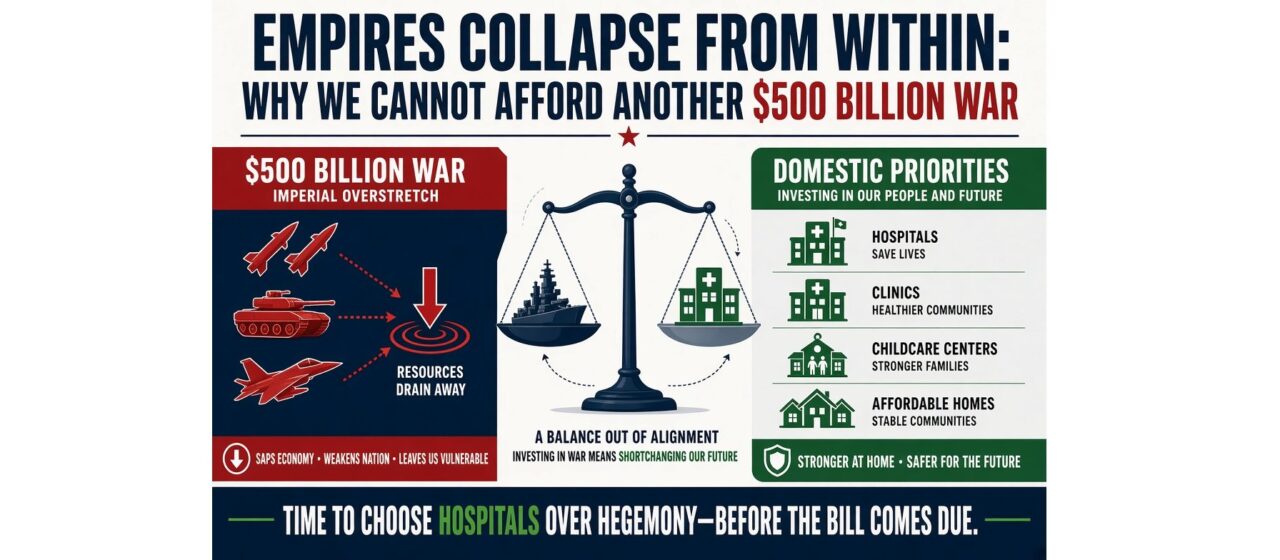
The opportunity costs are already visible. The same fiscal and political bandwidth that sustains open-ended campaigns is unavailable for hospitals, clinics, childcare, and affordable housing—the practical bases of social cohesion and long-term competitiveness. Disaster capitalism thrives in distraction: elites continue to demand more military outlays while the necessities of ordinary life are deferred. Nature abhors a vacuum; when bandwidth contracts, other powers fill the space not solely because of their own design, but because the gap was created by overcommitment.
A new normal is emerging in which fiscal limits and domestic strain constrain grand strategy. Treating another half-trillion in military spending as the default response will not reverse this trajectory. Sustainable influence begins with internal strength. Prioritizing endless campaigns over societal foundations risks confirming the decline that is already underway.
Time to choose hospitals over hegemony—before the bill comes due.