The CBO’s $38 billion figure through early August, and the $2–3 billion monthly cost that follows, measure what the Pentagon can invoice: munitions, extra flying hours, fuel, and lost equipment. That accounting is necessary. It is not complete.
The report leaves out the indirect and unintended bills that will outlast the sorties—inflation from disrupted oil and gas through the Strait of Hormuz, five years or more to refill interceptor stocks, unrepaired damage to regional bases, future veterans’ care, and interest on borrowed money. Those costs sit off the CBO page and on the publics.
A larger question sits behind the invoice. For fifty years the dollar’s role in oil settlement has been an emergent market habit, not a single 1974 “secret pact.” After Nixon ended gold convertibility in 1971, a documented U.S.–Saudi arrangement exchanged security assistance for Treasury purchases. It did not require exclusive dollar pricing; sterling sales continued for years. Later experiments—Iraqi euro sales under Oil-for-Food, Libyan talk of a gold-backed alternative, Venezuelan non-dollar channels—are historical facts. Official justifications were WMD, humanitarian intervention, and sanctions. “Petrodollar war theory” remains a disputed inference, not a declassified motive.
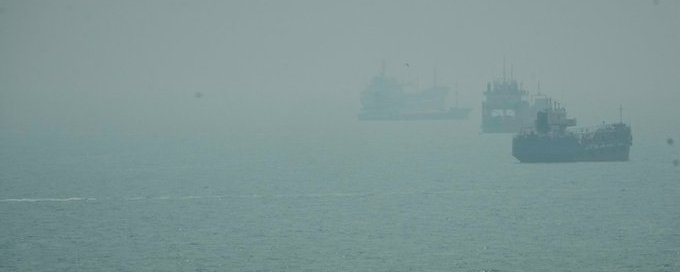
What is new is the venue. Hormuz carries roughly one-fifth of seaborne oil. Reports of limited yuan tolls, even if unevenly confirmed, pose a practical question no Treasury circular can answer: how do you sanction a strait? Dollar dominance still rests on depth and liquidity, about 80 percent of oil trade and the bulk of reserves. Prior cracks were patched. This one sits on a physical chokepoint where the world cannot easily reroute.
Relative American decline is no longer rhetoric. Fighting to freeze a fifty-year arrangement for a narrow set of Washington interests raises the monthly bill without buying certainty. The cheaper path is to bring producers, consumers, and Asian surplus holders into an orderly adjustment—so the transition is easier for everyone rather than fought for a few.
You can replace a missile. You cannot sanction a strait. Price the whole system, not only the sortie.
Please read the article and the accompanying comments by Turki Faisal Al Rasheed, Riyadh.