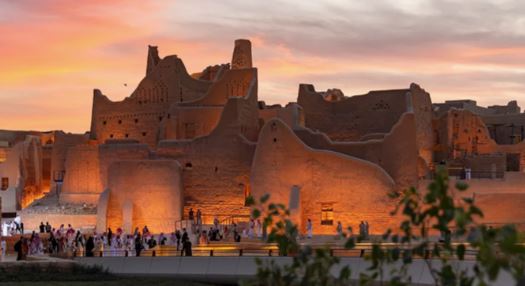
In the shadow of ancient mud-brick palaces that whisper tales of the First Saudi State’s birthplace, the Diriyah Global Seminar 2025 unfolded like a desert bloom, drawing scholars, policymakers, and visionaries to the heart of the Arabian Peninsula. Held from Dec. 11-12 under the theme “Sustaining Civilizations: Oases and the Continuity of Heritage,” the event illuminated how these verdant lifelines in arid expanses have cradled human ingenuity for millennia. At its core was a profound exploration of Wadi Hanifah — the 120 km lifeline that snakes through Diriyah and Riyadh — and its oases, not merely as historical curiosities, but as blueprints for tomorrow’s sustainable world.
Oases, those miraculous pockets of green amid relentless sands, have long been more than oases of relief; they are engines of endurance. From the fertile cradle of Al-Ahsa to the palm-fringed springs of Diriyah, these ecosystems sustained trade caravans, nurtured agricultural revolutions, and fostered cultural crossroads that gave birth to empires. The seminar, organized by the Diriyah Gate Development Authority, wove together ecological, architectural, and intangible threads of heritage, revealing how wadis such as Hanifah enabled settlements, irrigation ingenuity, and storytelling traditions that connect generations.
As Prince Saud bin Talal bin Badr, governor of Al-Ahsa and CEO of the Al-Ahsa Development Authority, noted in his opening address: “Nature has always shaped our identity — from the banks of Wadi Hanifah to the expansive oases that mirror our resilience.”
This two-day intellectual odyssey featured lectures, dialogues, and workshops dissecting the multifaceted legacy of oases: as environmental powerhouses fostering biodiversity; as tangible built landscapes etched with falaj (ancient irrigation) networks; and as intangible wellsprings of poetry, folklore, and social cohesion. Yet, amid the scholarly rigor, the seminar’s pulse quickened during a pivotal panel: “Thriving Natures: Thriving Opportunities — The Role of Wadis and Oases in Diriyah’s Sustainable Development.” Moderated at the Salwa Stage, it spotlighted how these natural arteries can propel Saudi Arabia’s green ambitions, emerging as a compelling voice of continuity and innovation. As a seasoned panelist and advocate for heritage-led innovation, I participated, weaving personal reflections into the discourse on balancing triumphs with the thorns of progress.
Wadi Hanifah is no ordinary valley; it is Diriyah’s beating heart, a testament to humanity’s dance with the desert. Stretching southeast from the Najd plateau’s highlands toward the Rub Al-Khali’s fringes, this seasonal waterway — dry save for rare flash floods — once teemed with life, channeling rainwater to irrigate date palms, acacia groves, and terraced farms. Archeological whispers reveal settlements dating back millennia, where the Banu Hanifah tribe, whose name evokes purity and uprightness. tilled the soil and traded ambergris and frankincense along its banks long before Islam’s dawn.
By the 18th century, Wadi Hanifah cradled Diriyah as the nascent Saudi State’s nucleus. Here, Imam Mohammed Ibn Saud forged alliances amid palm-shaded oases, their waters symbolizing not just sustenance but also sovereignty. The valley’s falaj systems — subterranean channels channeling groundwater with gravity-defying precision — irrigated vast orchards, supporting a population that swelled to tens of thousands.
Ecologically, it was a hotspot of diversity: home to Arabian leopards, hyraxes, and over 200 bird species, its microclimates a rare respite in the peninsula’s harsh aridity.
Urban sprawl in the 1970s scarred this idyll, turning the wadi into a dumping ground of refuse and unchecked effluent. Riyadh’s meteoric growth choked its flow, eroding soils and extinguishing native flora. This degradation exemplifies a broader challenge in arid urbanism: the tension between rapid development and ecological fragility. Critics argue that such unchecked expansion, fueled by oil-era prosperity, exacerbated water scarcity and soil salinization, with groundwater depletion rates in the Riyadh basin exceeding 2 meters annually in some areas.
Yet, this very crisis catalyzed redemption through the visionary Wadi Hanifah Comprehensive Development Program, launched in 2001 by the Arriyadh Development Authority (now the Royal Commission for Riyadh City) in collaboration with Canadian firm Moriyama & Teshima and engineers Buro Happold. This $200 million revival, which received the Aga Khan Award for Architecture in 2010, restored 85 km of the valley, planting 500,000 trees, rehabilitating wetlands, and constructing weirs to purify seasonal floods. Today, boardwalks wind through revived palm groves, and interpretive centers educate on sustainable water management, transforming a degraded scar into a model of ecological urbanism.
As a panelist, I evoked this phoenix-like resurgence during the discussion. “Wadi Hanifah is our profound legacy,” I declared, my voice resonant against the stage’s adobe backdrop. “From its biodiversity hotspots, where endangered species like the Arabian gazelle find sanctuary, to its falaj networks that prefigure modern drip irrigation, it embodies our capacity to harmonize nature with human ambition. And let us not forget the oral tapestries: tales of jinn-haunted springs and heroic floods that weave our cultural identity, linking past to future.”
My words framed the panel’s central thesis: oases as “vital engines” for sustainable development. Under the sub-theme “Food and Water Security as the Foundation for Prosperity and Sustainability,” speakers dissected how wadis can secure arid futures.
“In Diriyah’s oases, Saudi Arabia is not just sustaining civilizations but reimagining them, one balanced step at a time.”
Dr. Turki Faisal Al-Rasheed
I highlighted pilot projects in Diriyah, where smart sensors monitor aquifer levels, and agroforestry experiments blend native sidr trees with drought-resistant crops, boosting yields by 30 percent while sequestering carbon. “These are not relics,” I said. “They are roadmaps for resilience in a warming world.” Here, agreement on progress is unequivocal: These initiatives have demonstrably reversed biodiversity loss, with bird populations rebounding by 40 percent since restoration began. However, counterarguments persist — skeptics point to the lingering vulnerability of falaj systems to climate-induced droughts, which could undermine long-term viability without diversified water sources like treated wastewater integration. Addressing this, the Wadi Hanifah Comprehensive Development Program’s adaptive management framework, incorporating AI-driven predictive modeling, offers a pragmatic rebuttal, ensuring that obstacles become catalysts for deeper innovation.
The seminar’s insights resonate deeply with Saudi Arabia’s audacious sustainability odyssey, a cornerstone of Vision 2030. In 2025 alone, the Kingdom’s green finance issuances surged to $12 billion, commanding two-thirds of the regional market and underscoring Riyadh’s pivot from oil titan to green vanguard. Investment Minister Khalid Al-Falih reaffirmed this trajectory, pledging $1 trillion toward green infrastructure to attain net-zero emissions by 2060 — a goal blending the circular carbon economy with private sector infusions of up to $500 billion. This is not rhetoric; it is action etched in megawatts and hectares.
Consider the renewables renaissance: A landmark 2.8 GW solar partnership with Bahrain exemplifies cross-Gulf collaboration, harnessing the peninsula’s relentless sun to power desalination plants and reduce fossil reliance by 15 percent. The Public Investment Fund, managing nearly $1 trillion in assets, channels billions into green hydrogen — aiming for 4 million tons annually by 2030 — and renewables, with projects like the 1.5 GW Sudair Solar PV already online. The Saudi Green Initiative amplifies this, targeting 278 million tons of annual CO2 reductions by 2030 through afforestation, with 10 billion trees planted, and carbon capture hubs capturing 44 million tons yearly by 2035.
Innovation hubs like the Recovery initiative have nurtured 1,700 startups, from biotech firms engineering saline-tolerant crops to AI-driven water optimizers. Meanwhile, the Smart Mobility program rolls out electric vehicle charging at SPARK — the $6 billion innovation city in the Eastern Province — targeting 100,000 jobs and seamless urban electrification. Tourism, projected to swell to 15 percent of the national economy, funnels investments into 10,000 eco-luxury facilities, blending heritage stays in restored oases with low-impact adventures.
Yet, for all its momentum, Vision 2030’s green pivot faces formidable headwinds. The Kingdom’s entrenched hydrocarbon dependency — still accounting for 40 percent of gross domestic product — breeds regulatory inertia and financial strains, with volatile oil prices straining budgets for ambitious afforestation amid escalating desertification. Water scarcity looms largest: Greening efforts like the Green Riyadh Project, while planting millions of trees, demand vast irrigation volumes in a nation where per capita water availability has plummeted 80 percent since the 1970s. Critics, including environmental NGOs, caution that overreliance on desalination — energy-intensive and brine-polluting — risks coastal ecosystems, while urban heat islands in Riyadh exacerbate health vulnerabilities for low-income communities.
These obstacles underscore a counterargument: Rapid scaling may outpace equitable implementation, potentially widening social divides if job transitions from oil lag.
In agreement, however, Saudi leaders counter with evidence of adaptive strategies. The SGI’s $3.2 billion National Tree Planting Program boasts an 85 percent survival rate through advanced drip systems and soil amendments, while regional pacts like the Middle East Green Initiative foster knowledge sharing to mitigate financial hurdles. These measures affirm that progress, though imperfect, is not illusory — it is a deliberate navigation of perils, yielding tangible gains like a 20 percent drop in Riyadh’s urban temperatures via strategic shading.
Diriyah embodies this fusion. The DGDA’s $63 billion City of Earth masterplan — a 14 sq. km verdant expanse — plants 6.5 million native species along Wadi Hanifah, creating shaded escarpment trails and palm-canopied parks that cool ambient temperatures by 5 C. Over 10 sustainability certifications later, it is a human-centric oasis: adobe-inspired residences with passive cooling, rainwater harvesting, and AI-monitored biodiversity corridors. As I quipped on the panel: “We are not building on the wadi; we are building with it.” Even here, challenges persist — construction dust and traffic disruptions have sparked local concerns — but community consultations and phased rollouts demonstrate a commitment to inclusive resilience.
These strides transcend borders, elevating Saudi Arabia’s soft power as a custodian of shared planetary futures. By rehabilitating wadis and championing oases, the Kingdom positions itself as a bridge between ancient wisdom and cutting-edge climate tech — a narrative that resonates in forums from COP summits to G20 dialogues. Investments in AI for sustainability, from predictive flood modeling in Hanifah to global carbon trading platforms, forge alliances with tech giants and emerging markets.
This stewardship honors heritage while innovating equity: Women-led cooperatives in Diriyah’s oases now manage falaj maintenance, blending tradition with economic empowerment. Globally, it invites collaboration — think joint ventures with African nations on desert reclamation or Silk Road-inspired green trade routes. Counterarguments from international observers highlight scrutiny over greenwashing risks, given fossil fuel expansions, yet agreements abound in verifiable metrics: SGI’s marine protections have safeguarded 30 percent of territorial waters, earning accolades from UN bodies.
As the seminar closed, I posed a clarion call: “Will you join us in this green transformation? Together, we can forge a legacy that reveres our oases’ whispers while quenching tomorrow’s thirst — acknowledging the storms but charting the stars.”
I extend heartfelt thanks to the Diriyah Gate Development Authority, the King Salman Foundation, and all participants for curating this beacon of dialogue. The foundation, a private entity mirroring King Salman’s legacy in nonprofits, champions sustainable urbanization, knowledge preservation, and cultural fervor. In partnership, it underscores Diriyah’s role as a global agora where heritage fuels progress.
As 2025 fades, the seminar’s echoes linger in Wadi Hanifah’s rustling palms: a reminder that thriving natures beget thriving opportunities. In Diriyah’s oases, Saudi Arabia is not just sustaining civilizations but reimagining them, one balanced step at a time.
Diriyah’s Desert Bloom: How Oases Are Powering Saudi Arabia’s Green Revolution (Audio Over Reviow)
Diriyah’s Desert Bloom: How Oases Are Powering Saudi Arabia’s Green Revolution | Entreasures Ep. (Video Over Reviow)
Leave a Reply