In today’s rapidly evolving global landscape, which is characterized by geopolitical tensions, economic volatility and profound societal transformations, strategic leadership in the public sector stands as a cornerstone of effective governance.
Far removed from routine administrative tasks, it demands the articulation of ambitious long-term visions, the mobilization of national resources and the skillful navigation of multifaceted challenges. This form of leadership seeks not only to address immediate public needs but to foster sustainable development, institutional resilience and national prosperity in an era defined by uncertainty.
Strategic management and strategic leadership, though closely related, fulfill complementary yet distinct roles. Strategic management centers on systematic planning, efficient resource allocation, performance monitoring and the execution of organizational strategies. In contrast, strategic leadership focuses on visionary thinking, inspirational guidance, adaptive decision-making and the cultivation of organizational cultures capable of thriving amid disruption. Within the public sector, these qualities must be exercised with a steadfast commitment to transparency, equity, accountability and the broader public interest, distinguishing them from purely commercial imperatives.
Does strategic leadership in the public sector conform to a universal set of rules, specifications and world standards? The answer is inherently complex. While foundational principles, including ethical conduct, evidence-based policymaking, stakeholder engagement and good governance, enjoy widespread acceptance, no single prescriptive framework can adequately address the diversity of historical, cultural and geopolitical contexts. Effective leadership emerges from a deep understanding of local realities rather than the imposition of external models.
“Effective leadership emerges from a deep understanding of local realities rather than the imposition of external models”
The academic literature addressing strategic leadership in the public sector remains notably sparse when compared to the voluminous works on strategic management. This gap underscores the inherent challenges of the field.
Leadership manifests in myriad forms and is exercised across vastly different arenas. Some leaders excel in commanding military forces during wartime, demonstrating resolve under extreme pressure. Others build expansive commercial enterprises, showcasing innovation and organizational scale. Some achieve groundbreaking scientific discoveries that enhance human welfare or guide nations through public health emergencies. Others enrich society through profound artistic expression, athletic excellence that unites communities or transformative approaches to communication and ideas. Examining how such varied individuals attain and sustain leadership positions necessitates a holistic perspective that accounts for the unique conditions of their time.
At the heart of this inquiry lies the critical influence of historical context, surrounding cultures and societal dynamics. The 14th-century Arab polymath Ibn Khaldun, renowned for his groundbreaking “Muqaddimah,” provided one of the earliest systematic analyses of civilizational rise and fall. He outlined a natural life cycle of states progressing through five stages: triumph, leisure, contentment, extravagance and decline, often spanning three generations. Central to this process was the concept of “asabiyyah” (social cohesion), which weakens over time as luxury and internal divisions take hold.
Ibn Khaldun further highlighted four factors that precipitate national decline: the appointment of unqualified individuals to positions of authority, the marginalization of scholars and experts, the substitution of the rule of law with coercion, and the exploitation of public treasuries for private gain. These insights continue to offer valuable guidance for evaluating modern governance and prolonged conflicts.
Integrating Ibn Khaldun’s cyclical perspective with George Modelski’s long cycle theory of world order yields a particularly robust analytical framework. Modelski described global power structures as evolving through approximately 100-year cycles, each comprising four 25-year phases: periods of chaos or global conflict, the ascent of a dominant power, the gradual erosion of its legitimacy, and a return toward decentralized arrangements. When combined, these theories emphasize that successful navigation of such cycles demands comprehensive national power encompassing military, economic, political and cultural dimensions and exceptional strategic leadership capable of preserving cohesion and adapting to change.
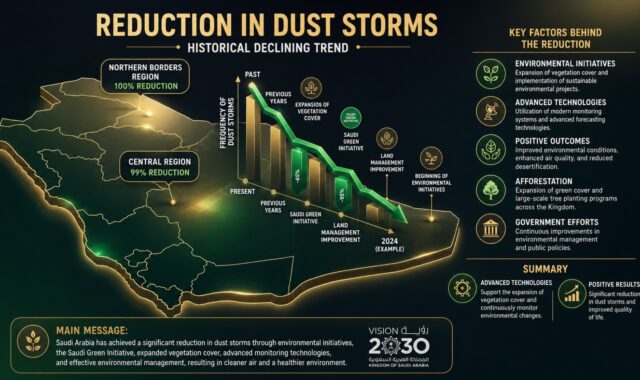
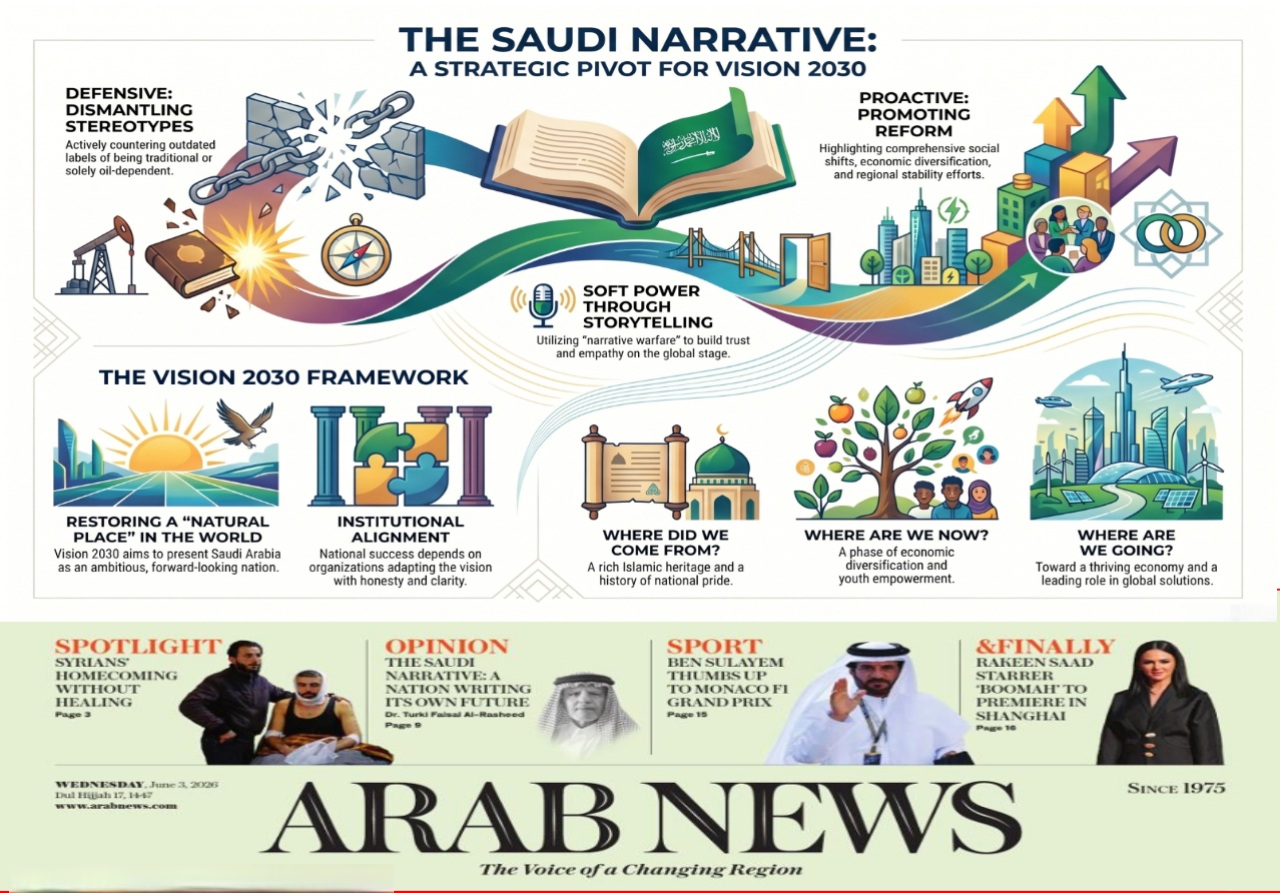
Saudi Arabia’s ambitious national transformation provides a contemporary model of such leadership. As detailed in my book, “Saudi Arabia’s Transformation: Uncertainty and Sustainability,” Saudi Arabia has launched Vision 2030 to diversify and transform the economy away from oil revenue. The government of Saudi Arabia has been pioneering the management of long-term strategic vision since 2002.
“In the face of constraints and challenges like the collapse of oil prices and the global COVID-19 pandemic, the Kingdom demonstrated that even in the face of hardship, it has shown determination to pursue the country’s sustainable and strategic transformation into a diversified economy. This journey reflects a profound commitment to the triple bottom line of sustainability — economic, social and environmental — while navigating uncertainty through adaptive governance and comprehensive state power.”
This forward-looking strategy exemplifies the kind of proactive leadership that anticipates global shifts while remaining rooted in national identity and cultural heritage.
The geopolitical and geoeconomic dimensions of strategic leadership have gained heightened urgency in recent times. Developments such as the US-Iran agreement suggest pathways toward diplomatic de-escalation and regional stability. Yet these efforts are frequently undermined by powerful interest groups. In particular, the government of Israeli Prime Minister Benjamin Netanyahu and associated extremist elements have been criticized for actions perceived as seeking to provoke conflicts and disrupt emerging stability to serve narrow political and economic objectives.
The future belongs not to those who instigate wars but to those who courageously choose peace, progress and shared human dignity.
Dr. Turki Faisal Al-Rasheed
Such dynamics form part of the broader patterns of predatory capitalism that have contributed to global instability over recent decades, often prioritizing the interests of powerful elites in Washington and select capitals while ordinary citizens in the US and its allies face growing difficulties in meeting their basic human needs.
In this challenging environment, strategic leadership in the public sector must rise to address both immediate threats and deeper structural issues. It calls for a resolute commitment to sustainable development, inclusive economic growth, regional cooperation and the active prevention of conflicts that serve narrow agendas at the expense of global peace and human welfare. Leaders worldwide bear a responsibility to counter forces that perpetuate division and war, championing instead policies that promote equity, resilience and shared prosperity.
Effective strategic leadership does not pursue unattainable perfection but strives to secure the best possible outcomes under prevailing conditions, guided by wisdom, ethical clarity and a profound understanding of context.
As the tides of global power continue to shift in unpredictable cycles, the true test of strategic leadership lies not in avoiding uncertainty but in harnessing it to forge resilient futures. Saudi Arabia’s visionary transformation under Vision 2030 stands as a beacon of what is possible when foresight, cultural wisdom and unwavering determination converge.
In a world weary of conflict and predatory agendas, it is time for leaders across the region and beyond to rise above narrow interests, champion sustainable development and build bridges of cooperation. Only through such enlightened stewardship can nations transcend the ruins of the past and secure a prosperous, stable tomorrow for generations yet to come. The future belongs not to those who instigate wars but to those who courageously choose peace, progress and shared human dignity.
- Dr. Turki Faisal Al-Rasheed is the author of “Saudi Arabia’s Transformation: Uncertainty and Sustainability” (Routledge, 2026). X: @TurkiFRasheed
https://arab.news/rwxjz
Timeless Leadership Lessons for a Turbulent World | Ibn Khaldun, Vision 2030 & Strategic Leadership