In an era of unprecedented global turbulence, Arab and Islamic nations face a critical imperative: deeper integration to forge comprehensive security. This concept must extend beyond military might to include economic, food, water, energy, cyber and information security, alongside unwavering political independence.
Saudi Arabia has emerged as a pivotal leader and security guarantor in the Gulf and Horn of Africa. Regional stability is indispensable for realizing Vision 2030 amid volatile international dynamics.
The world is witnessing profound political, economic and military shifts and conflict, which signal the decline of the old unipolar system and the ascent of multipolarity. The US is recalibrating its global role, prioritizing national interests while seeking to reform institutions to better align with itself and its allies. Russia pushes boundaries through territorial assertions, China expands economic dominance and influence and Europe confronts perceived US disengagement, compelled to pursue greater strategic autonomy, bolster defense spending and accept sacrifices after decades of reliance on the American security umbrella.
This month’s Munich Security Conference, themed “Under Destruction,” starkly reflected fractures in the international order. The accompanying Munich Security Report described a shift to “wrecking-ball politics,” where destructive forces prevail over reform, multilateralism erodes and divisions among major powers deepen. The report concluded that the US-led post-1945 order is now actively being destroyed.
European leaders voiced alarm over escalating conflicts, US-China rivalry, Middle East instability, energy crises and threats to the rules-based order. German Chancellor Friedrich Merz bluntly declared that the post-Second World War rules-based global order “no longer exists,” supplanted by an era of raw great power politics. Danish Prime Minister Mette Frederiksen reinforced the call for decisive European action.
US Secretary of State Marco Rubio offered a forthright critique, deeming postwar institutions like the UN unfit for today’s realities. He stressed that US national interests must come first, portraying today’s American policy as renewal rather than destruction. Rubio lambasted the UN’s ineffectiveness, citing its failure to halt Iran’s nuclear program — which “required 14 bombs dropped with precision from American B-2 bombers” in a recent escalation — as emblematic of its obsolescence.
Amid this flux, the central question is: Where does the Arab and Islamic region fit? Despite persistent turmoil, fears of Iranian escalation, US military postures and Israeli Prime Minister Benjamin Netanyahu’s confrontational rhetoric, the region has a unique opportunity to assert itself as an active geopolitical pole, wielding the economic heft and moral authority to shape global equilibriums.
Prominent analyses underscore how prolonged conflict serves narrow interests. An op-ed by Thomas L. Friedman in The New York Times this month, titled “Netanyahu Plays Trump and American Jews for Fools — Again,” argued that Netanyahu’s far-right coalition perpetuates instability for political gain. Chaos sustains high military budgets, unchecked US aid, settlement growth and survival through perpetual threats, often amplified by Iran-focused rhetoric. This yields a ravaged Gaza, heightened regional tensions, alienated partners, surging global antisemitism threatening Jews worldwide and US complicity risking its own standing. True peace is blocked because the status quo profits the coalition more than resolution does.
The region boasts unparalleled assets: vast oil and gas reserves fueling the global economy; strategic control of chokepoints like the Suez Canal, Bab Al-Mandab Strait, Strait of Hormuz and the Bosphorus; geographic centrality bridging continents; immense solar resources for green hydrogen and renewables; critical minerals essential for technology; and a dynamic, youthful workforce.
These endowments elevate the Arab and Islamic world from a mere regional actor to an influential force in multipolarity. Realizing this demands intensified security, economic, food, water, energy, cyber, information and political integration, while countering extremism, safeguarding cultural identity and advancing social justice.
Saudi Arabia’s foreign policy has evolved decisively toward initiative-taking engagement across the Gulf, Levant and Horn of Africa. Riyadh actively counters fragmentation by militias, nonstate actors and separatists in Syria, Yemen, Libya, Sudan, Somalia and Djibouti.
Notable alliances include the September 2025 Strategic Mutual Defense Agreement with Pakistan, the sole nuclear power in the Islamic world, bolstering deterrence and joint security cooperation. Riyadh also spearheads coordination with Cairo and Ankara to restore balance, uphold Arab state sovereignty and tackle conflicts collaboratively in Gaza, Yemen, Sudan and elsewhere.
In the Horn of Africa, Saudi initiatives encompass military partnerships, Red Sea safeguarding, the protection of Bab Al-Mandab and efforts to neutralize divisive external interventions.
As a regional leader and security guarantor, Saudi Arabia understands that domestic stability and Vision 2030 flourish only in a secure, mutually beneficial environment.
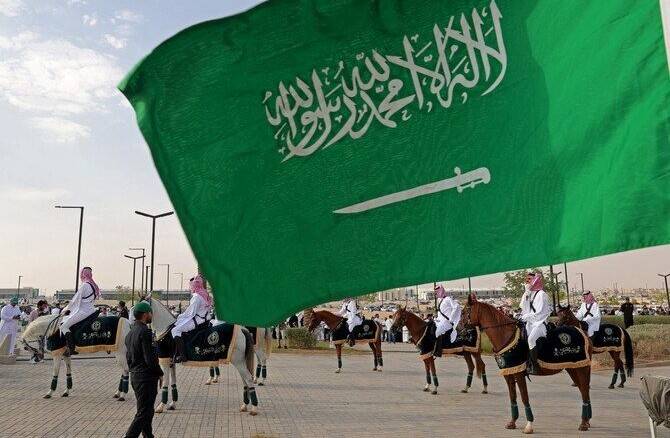
As a proud Saudi citizen, this week’s Founding Day celebrations — marking 299 years since Imam Mohammed bin Saud founded the First Saudi State in Diriyah in 1727 — profoundly reaffirmed our resilient identity. This year’s events went beyond remembrance, embodying continuity, unity and unstoppable progress.
“Saudi Arabia’s foreign policy has evolved toward initiative-taking engagement across the Gulf, Levant and Horn of Africa.”
Dr Turki Faisal AL Rasheed
The standout feature was the genuine pride among the Kingdom’s youth. Both in Riyadh and nationwide, schoolchildren, university students and young professionals connected vividly to their heritage through cultural workshops, historical reenactments, community events and interactive programs. They linked Diriyah’s principles of justice, stability and unity to Vision 2030’s achievements, illustrating how historical resilience powers today’s economic diversification, global outreach and bold ambitions.
In interactions with international visitors, tourists and expatriates, young Saudis conveyed this 299-year saga with confidence and insight — showing national pride as inclusive and outward-looking, aligned with Vision 2030’s pillars of vibrant society, cultural preservation, youth empowerment and belonging.
This generational fusion of heritage and aspiration proves Saudi identity is dynamic: a seamless blend of rooted tradition and forward momentum. Founding Day 2026 was vivid evidence of the unbreakable link between past foundations and future promise, galvanizing collective resolve for a prosperous, unified Kingdom amid global and regional challenges.
What remains essential is unified Arab backing to magnify these efforts, enabling the region to emerge as a potent, balancing force in international affairs.
https://www.arabnews.com/node/2634437
Prefer watching over reading? View the full article in video form at the link below.
https://www.youtube.com/watch?v=U_sYg2LvWVc&t=13s