By: Dr. Turki Faisal Al Rasheed
Jeffrey Epstein didn’t operate alone, he was the visible face of an invisible machine: elite networks in Washington that turn wars, suffering, and shattered nations into private fortunes while the rest of the world bleeds.
The recent disclosure of Jeffrey Epstein-related documents by the U.S. Department of Justice has reopened debates about elite networks, transparency, and the far-reaching consequences of unchecked power. Released on January 30, 2026, under the Epstein Files Transparency Act of 2025, the files include over 3 million pages, 2,000 videos, and 180,000 images. Deputy Attorney General Todd Blanche described this as fulfilling legal mandates, with redactions to protect victims and sensitive data. However, critics from across the political spectrum argue that the release prioritizes volume over clarity, leaving key questions about Epstein’s enablers and broader implications unanswered. These documents not only highlight Epstein’s ties to influential figures but also underscore how such networks may contribute to global instability, benefiting a small elite in Washington at immense human and economic cost worldwide.
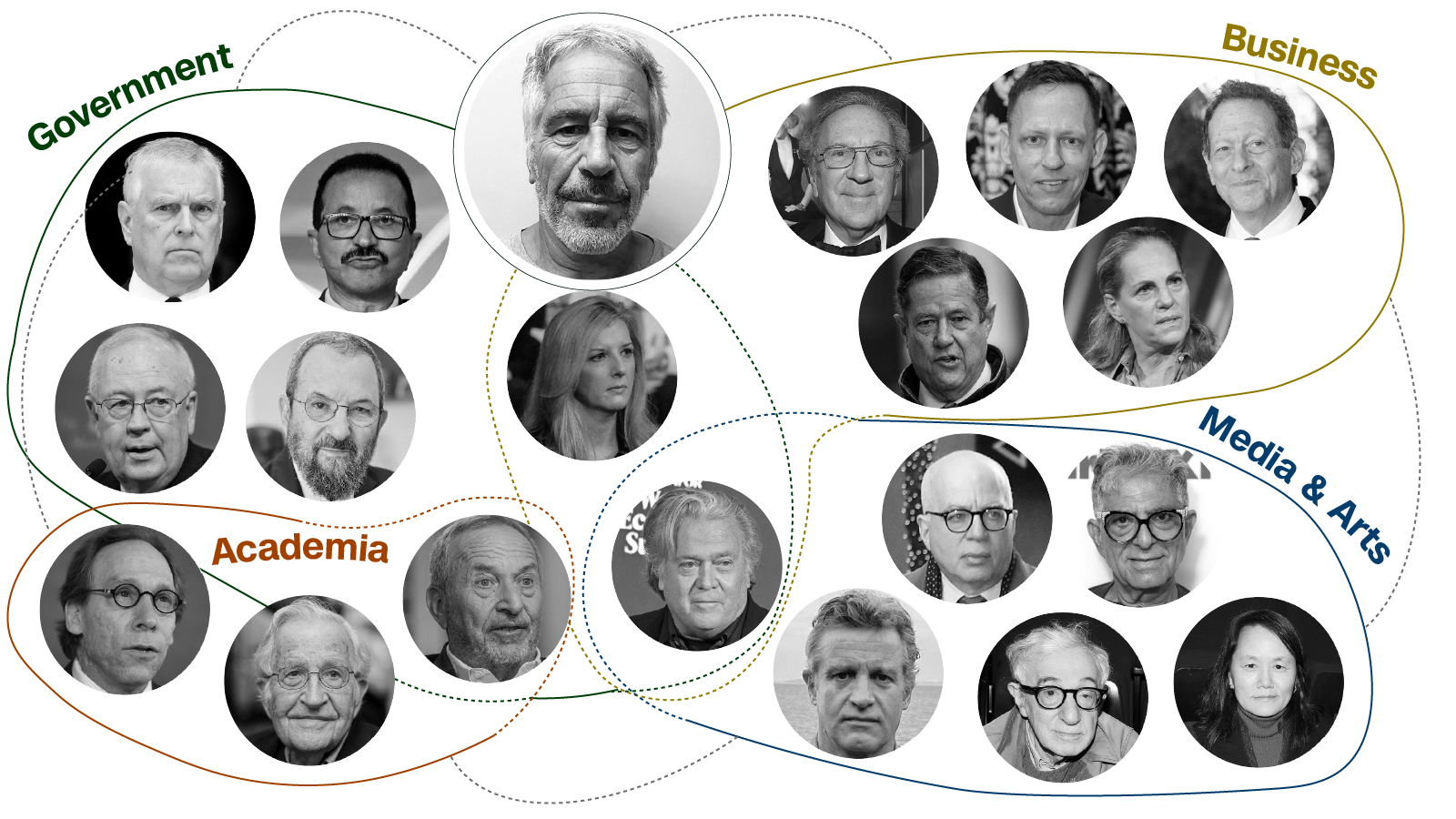
The materials reveal Epstein’s enigmatic wealth and connections. At his 2019 death, his estate was valued at nearly $600 million, fueled by companies like Financial Trust and Southern Trust in the U.S. Virgin Islands, which generated over $800 million from 1999 to 2018 through client fees and tax exemptions. Clients included billionaires like Leslie Wexner and Leon Black, Recent disclosures identify additional figures, such as Mortimer Zuckerman and Ariane de Rothschild, paying exorbitant sums for vague services despite Epstein’s lack of credentials. While these details illuminate financial networks, the full client list remains incomplete, fueling speculation about deeper enablers.
Among the most contentious unresolved issues are allegations of Epstein’s links to foreign intelligence, particularly Israel’s Mossad. A 2020 FBI memo cites an informant who believed Epstein was a “co-opted Mossad agent,” trained under former Israeli Prime Minister Ehud Barak, with ties to Alan Dershowitz for debriefings. Epstein’s interactions with Barak, including property visits, and his pro-Israel stance appear in the files. Ghislaine Maxwell’s father, Robert Maxwell, was reportedly a Mossad operative, adding circumstantial weight. Recent investigations suggest Epstein brokered deals for Israeli spy-tech firms and influenced U.S. policy toward Iran. However, Israeli officials, including Naftali Bennett, deny any Mossad involvement, labeling claims “categorically false.” Mainstream analyses view much of this as unsubstantiated conspiracy, lacking concrete proof. Public polls show 45% of Americans believe Epstein collaborated with foreign intelligence, with 27% specifying Israel, reflecting eroded institutional trust.
These unverified theories have real-world repercussions, particularly for the global Jewish community. Conspiracy narratives tying Epstein to Mossad risk conflating individual actions with Judaism or Israel, exacerbating antisemitism. The Anti-Defamation League reports spikes in online hate, blending anti-Israel sentiments with tropes of Jewish control. Such claims echo historical scapegoating, potentially leading to increased hate crimes, social isolation, and political targeting. The release has unleashed a wave of online conspiracies, turning private emails into “proof” of Jewish plots, further polarizing discourse. This not only harms Jewish communities but erodes democratic trust, as antisemitism merges with anti-Zionism in far-right and far-left circles.
When a handful of billionaires and defense contractors in Washington grow richer with every bomb dropped and every child starves, the Epstein files become more than scandal, they become proof that global chaos is no accident; it is profitable business.
Beyond Epstein, these networks exemplify “disaster capitalism,” were elites’ profit from crises like wars and instability. U.S. foreign policy in the Middle East has often fueled such dynamics, benefitted Washington-based corporations and officials while inflicted global damages. In Iraq (2003-2011), the U.S. invasion aimed at regime change but resulted in over one million deaths, $2 trillion in costs, and political fragmentation, enhancing Iran’s influence. Defense firms like Halliburton reaped billions from reconstruction contracts, often poorly executed, while Iraq descended into sectarian violence. Similarly, the Afghanistan war (2001-2021) cost $2.26 trillion, 2,400 U.S. lives, and left the Taliban in power, with ongoing extremism. These interventions created markets for private contractors, sustaining a “permanent war economy” that prioritizes profit over stability.
The Gaza conflict illustrates ongoing patterns. Since October 2023, Israel’s operations have devastated Gaza’s economy, reducing GDP by 86% and causing food insecurity for 95% of residents. U.S. military aid to Israel $37 billion over a decade supports operations while boosting American arms sales, with firms like Raytheon profiting. Broader U.S. spending on Middle East operations since October 2023 totals $9.65-$12.07 billion, exacerbating regional debt and displacement. These actions have displaced millions, fueled refugee crises straining Europe, and heightened global terrorism risks. In Yemen, U.S.-backed Saudi interventions have prolonged famine and instability, benefiting defense exporters.
Globally, these interventions impose staggering costs: $6.4 trillion in U.S. war spending since 2001, millions of dead, environmental degradation, and weakened democracies. They erode U.S. credibility, provoke adversaries like Iran, and spark arms races. Economic fragmentation in the Middle East high debt-to-GDP ratios, stagnant growth isolates “flyover” states like Iraq and Syria, while Gulf powers pivot to Asia. Politically, they deepen polarization, with blowback including terrorism reaching Europe and the U.S. These damages serve a few: defense contractors, lobbyists, and officials in Washington who gain from perpetual conflict.
Drawing on Ibn Khaldun’s cycles of societal decline from solidarity to extravagance and fragmentation the U.S. trajectory mirrors a late stage where inequality and self-interest erode collective responsibility. The Epstein case, with its alleged intelligence ties, symbolizes how elite networks perpetuate instability for gain, at the expense of global peace and vulnerable communities.
In conclusion, the 2026 Epstein files expose not just personal scandals, but systemic issues were power elites in Washington profit from worldwide chaos. Alleged Mossad links remain speculative, yet they risk heavy costs for Jewish communities through rising antisemitism. True accountability demands separating fact from fiction, reforming U.S. interventions, and prioritizing universal justice over elite benefits.
-
Dr. Turki Faisal Al-Rasheed is a visiting professor at the University of Arizona and an adviser at the American University of Beirut. He is the author of “Saudi Arabia’s Transformation: Uncertainty and Sustainability.
Unresolved Shadows: Epstein’s Ties to Intelligence, War Profits & Global Instability (Audio overview)
Leave a Reply