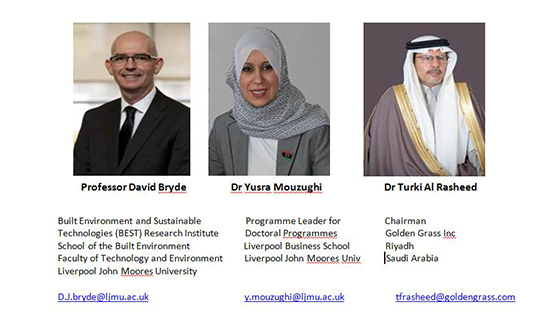
I am co-organizing a workshop for the Gulf Research Meeting, Cambridge UK (2-5 July 2013). Gulf Research Meeting aims to bring together a community of scholars and practitioners working on the region to exchange views, present their research, exchange views and best practise as well as enhance their understanding of topical issues related to the Gulf region. Details of the workshop are below.
Participation in the workshop requires the submission of a paper proposal (of approx. 500 words in English) and the completion of the online form on the website by January 31, 2013.
The website link to our workshop is:
http://grm.grc.net/index.php?pgid=Njk=&wid=NjU=&yr=2013
Most participants will be eligible for a travel grant as outlined on the website: http://grm.grc.net/ which includes all information concerning the list of workshops, the individual workshop descriptions, the travel, registration process, and the rules and guidelines for participation.
We have already received some very interesting proposals and believe that it will be a really exciting workshop. Please feel free to submit a proposal for the workshop and/or circulate to any interested colleagues.
“Sustainable Development Challenges in the GCC”
Abstract:
The Gulf Cooperation Council (GCC) countries are increasingly being faced by the challenges that have faced western countries in terms of how to balance the need to develop their economies whilst at the same time taking into account the impact of such developments on the environment and on communities and individuals; the classic concepts of “profit” v “planet” v “people” or balancing the Triple Bottom Line of “environmental”, “economic” and “social” sustainability.
As the GCC countries develop their built environments – including commercial and non-commercial properties and their infrastructures; their industrial capacities – often through large-scale industrialization programs; and their agricultural capacities, there are sustainability issues to consider. Taking each of the Triple Bottom Line elements in turn; environmental-sustainability issues such as: waste, recycling, water usage, energy – including the use of renewables, and pollution – to name but a few; economic-sustainability issues including: employment opportunities for local people, education and training and engagement of business and individuals that make up the supply chains and finally, social-sustainability issues such as: safety at work, working hours, equality and diversity, noise dust and pollution, traffic congestion, stakeholder engagement and community involvement in decision-making.
Many of these issues are increasing in importance for the GCC. For example, in respect of environmental sustainability, some GCC countries are facing energy deficits and will be net importers of energy in the near future; and hence are considering the use of more sustainable sources of energy such as renewables. In relation to economic sustainability, the Middle East region has one of the highest youth unemployment rates in the world and there is a great challenge in developing a skilled workforce and providing them with jobs. And the fact that the GCC countries are the largest recipients of temporary migrants in the world has implications for social sustainability in terms of the coherence and fabric of societies. In general, within the Middle East and MENA regions, the failure of countries to engage in sustainable development, with particular consideration of the social and economic impacts, was arguably one of the main contributors to the Arab Spring. For example, from an economic perspective, the Middle East and MENA region suffered from an unequal distribution of wealth which is a direct result of a lack of clear sustainable development strategies. Similarly, from a social perspective, the failure to engage all parts of the community in the decision making process and provide equal opportunities for all, again through a lack of strategic sustainable development, fuelled a sense of alienation and isolation which ultimately led to the Arab Spring.
Regards,

Leave a Reply